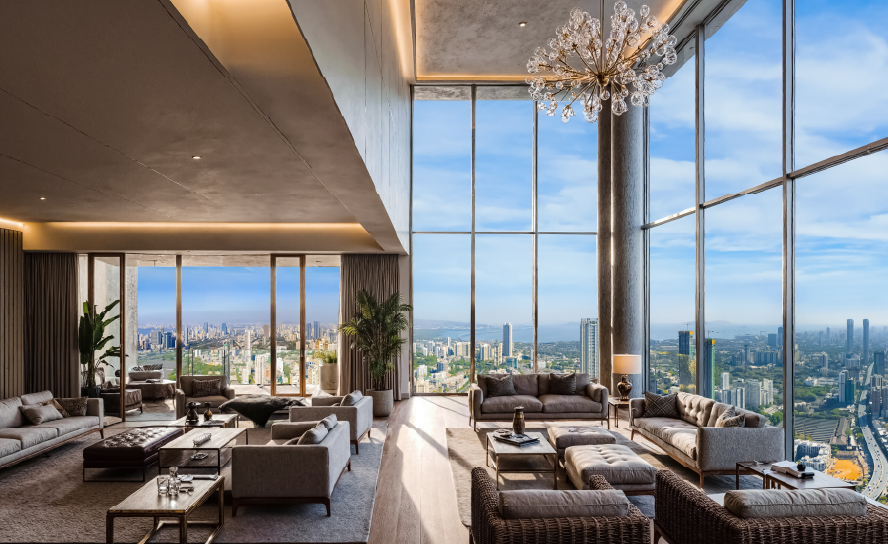
In India’s rapidly evolving property landscape, AI real estate architecture is fundamentally transforming how buildings are conceived, designed, and constructed. At Tribeca, we recognize that artificial intelligence isn’t just the future—it’s our present reality, driving innovation in every project we undertake. By integrating AI in property design and leveraging predictive design AI, we’re creating spaces that don’t just meet today’s needs but anticipate tomorrow’s challenges with remarkable precision and intelligence.
AI in property design represents a paradigm shift from traditional architectural approaches to data-driven, intelligent design methodologies. Advanced machine learning algorithms analyze thousands of variables simultaneously—from climate patterns and soil conditions to demographic trends and lifestyle preferences—enabling architects to create optimized layouts that maximize natural light, enhance airflow, and minimize energy consumption.
At Tribeca, our design teams utilize sophisticated AI platforms that can simulate countless scenarios in minutes, testing different configurations for thermal comfort, acoustic performance, and structural integrity. This technology allows us to fine-tune every aspect of our developments, from the orientation of buildings to the placement of windows, ensuring optimal performance across multiple parameters. The result is architecture that responds intelligently to its environment while delivering superior comfort and efficiency to residents.
The power of predictive design AI lies in its ability to forecast trends and requirements long before they become apparent to human observers. By analyzing historical data, market patterns, demographic shifts, and urban development trajectories, AI systems can predict how neighborhoods will evolve, what amenities will become essential, and how living preferences will change over time.
This predictive capability enables Tribeca to design buildings that remain relevant and valuable for decades. Our AI systems consider factors like population growth, transportation infrastructure development, environmental changes, and technological advancement to create spaces that adapt to future requirements. Whether it’s incorporating flexible layouts that can accommodate changing work patterns or installing infrastructure for emerging technologies, predictive design AI ensures our developments stay ahead of the curve.
Smart architecture real estate represents the convergence of artificial intelligence, Internet of Things (IoT) technology, and sustainable design principles. These buildings are equipped with interconnected systems that learn from occupant behavior, optimize resource consumption, and proactively address maintenance needs before issues arise.
Tribeca’s smart buildings feature AI-powered climate control systems that learn individual preferences and adjust automatically for optimal comfort while minimizing energy use. Advanced security systems use facial recognition and behavioral analysis to enhance safety without compromising privacy. Automated lighting responds to natural light levels and occupancy patterns, while smart elevators optimize traffic flow during peak hours.
The integration of proptech India solutions ensures our developments remain at the forefront of technological innovation. These systems not only enhance the living experience but also provide valuable data insights that help property managers optimize operations and reduce costs, creating value for both residents and investors.
AI building design tools are revolutionizing how architects approach the creative process. Generative design algorithms can explore thousands of design variations based on specific parameters and constraints, suggesting innovative solutions that human designers might never consider. These tools don’t replace creativity but amplify it, enabling architects to explore more possibilities in less time.
Advanced simulation capabilities allow for rigorous testing of structural performance, energy efficiency, and environmental impact before construction begins. AI systems can model earthquake resistance, wind load calculations, thermal performance, and acoustic properties with unprecedented accuracy, ensuring buildings meet or exceed all safety and comfort standards.
At Tribeca, we use AI building design tools to create structures that are not only visually striking but also optimized for functionality, sustainability, and cost-effectiveness. This approach enables us to deliver projects that achieve superior performance across multiple metrics while maintaining our signature aesthetic standards.
The adoption of AI in real estate India is accelerating rapidly, driven by urbanization, digital transformation, and changing consumer expectations. With India’s real estate market projected to reach significant growth milestones in the coming years, AI technology is becoming essential for developers who want to remain competitive and deliver superior value to customers.
Smart homes India demand is particularly strong among urban millennials and Gen Z buyers who expect integrated technology as a standard feature rather than a luxury add-on. This demographic shift is pushing developers to incorporate AI-driven solutions from the design phase through to property management and maintenance.
At Tribeca, our commitment to AI real estate architecture extends beyond technology adoption to strategic implementation that enhances every aspect of the development process. Our recent projects showcase how AI integration can improve construction efficiency, reduce costs, enhance sustainability, and deliver superior resident experiences.
From our landmark developments in Pune and Mumbai to upcoming projects in Gurugram and Noida, each Tribeca property demonstrates our dedication to innovation and excellence. We’re not just building structures; we’re creating intelligent ecosystems that adapt, learn, and evolve with their inhabitants.
As we look toward the future, Tribeca remains committed to pushing the boundaries of what’s possible in real estate development. Through strategic implementation of AI technologies, we’re creating buildings that are more than just places to live or work—they’re intelligent partners in creating better lives for the people who inhabit them.